
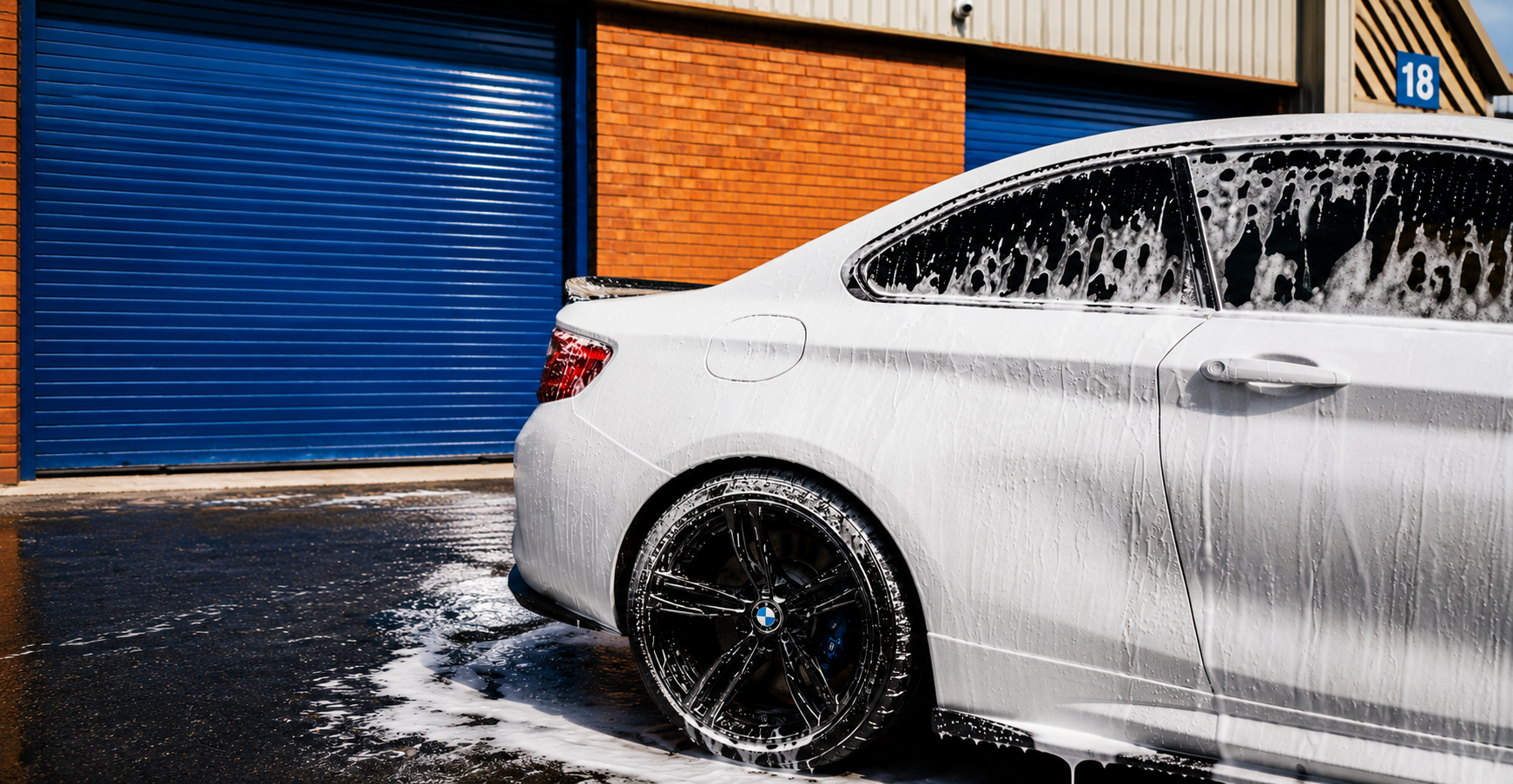
When most people think about car detailing, their attention immediately goes to the paintwork. A glossy finish, deep reflections, and swirl-free panels are often the ultimate goal. However, there's one area of your vehicle that faces significantly harsher conditions every day: your wheels.
From brake dust and road salt to tar, iron fallout, and general road grime, your wheels are constantly exposed to contamination that can quickly damage their appearance and even their finish. In many cases, wheels become the dirtiest part of a vehicle within just a few days of washing.
Understanding how to clean and protect your wheels properly not only improves the appearance of your vehicle but also extends the life of your alloys and makes future maintenance significantly easier.
Why Wheels Get So Dirty So Quickly
Unlike paintwork, wheels operate in one of the harshest environments on the vehicle. They sit closest to the road surface, constantly exposed to water, grit, mud, tar, and debris.
The biggest contributor to wheel contamination is brake dust. Every time you apply your brakes, microscopic particles are released from the brake pads and rotors. These particles are extremely hot when generated and can embed themselves into wheel finishes.
Over time, brake dust becomes baked onto the wheel surface, making it increasingly difficult to remove through regular washing alone.
Winter conditions make the problem even worse. Road salt and de-icing chemicals mix with brake dust to create a highly corrosive combination that can damage lacquered, painted, polished, and diamond-cut wheels if left untreated.
The Hidden Danger of Brake Dust
Many drivers think brake dust is simply dirt, but it's actually far more aggressive.
Brake dust contains metallic particles that can bond to wheel surfaces in much the same way iron fallout bonds to paintwork. Left untreated, these particles can cause staining, corrosion, and pitting.
This is why using a dedicated wheel cleaner is essential. Standard car shampoo simply isn't designed to break down the unique contamination found on wheels.
A product such as Valet-Pro Bilberry Wheel Cleaner is specifically formulated to tackle brake dust and road grime safely without relying on harsh acids. Its non-acidic formula makes it suitable for regular maintenance cleaning while remaining safe for most wheel finishes.
Recommended Product
Why You Should Always Clean Wheels First
One of the simplest ways to improve your wash routine is to clean your wheels before touching the paintwork.
Wheels contain the highest concentration of abrasive contamination on the vehicle. If wheel brushes, wash mitts, or towels are accidentally transferred to paintwork, you dramatically increase the risk of scratches and swirl marks.
Professional detailers almost always clean wheels first for this reason.
By tackling the dirtiest area of the car before the paintwork, you reduce the chance of cross-contamination and create a safer overall wash process.
The Importance of Proper Wheel Brushes
Using the right wheel cleaner is only half the battle. To remove contamination effectively, you also need the correct tools.
Many generic brushes are either too stiff or poorly designed for modern wheels. Aggressive bristles can scratch delicate finishes, while inadequate brush designs struggle to reach deep into wheel barrels.
The Chemical Guys Wheelie All Exterior Surface & Wheel Brush is designed specifically for safe wheel cleaning. Its soft bristles effectively agitate dirt while remaining safe on painted, powder-coated, and lacquered finishes.
The flexible design also allows access to difficult areas behind spokes and around brake calipers where contamination often accumulates.
Recommended Product
Don't Forget the Wheel Barrels
Many car owners focus solely on the visible face of the wheel, but the inside barrel is often where the worst contamination lives.
Brake dust accumulates heavily inside wheel barrels and can quickly bake onto the finish due to heat generated during driving.
Cleaning these hidden areas not only improves appearance but also helps maintain the long-term condition of the wheel.
Regular barrel cleaning prevents heavy contamination from building up and makes future maintenance significantly easier.
Tyres Need Attention Too
Tyres are frequently overlooked during the cleaning process, yet they play a major role in the overall appearance of a vehicle.
A clean wheel paired with a dirty tyre can still make the entire car look neglected.
Road grime, old tyre dressings, and environmental contamination build up on rubber surfaces over time. Proper cleaning restores the natural appearance of the tyre and prepares it for a fresh dressing if desired.
Taking a few extra minutes to clean tyres thoroughly can completely transform the finished look of your vehicle.
Wheel Protection Makes Future Cleaning Easier
Just as paintwork benefits from protection, wheels can benefit enormously from dedicated wheel coatings and sealants.
Protective layers help prevent brake dust and grime from bonding directly to the wheel surface. This means contamination rinses away more easily during future washes.
One of the most effective solutions available is Gyeon Q² Rim, a ceramic coating specifically developed for wheels.
Its heat-resistant formula is designed to withstand the harsh environment around brakes while creating a slick, hydrophobic barrier that resists contamination.
Recommended Product
How Often Should You Clean Your Wheels?
The answer depends largely on your driving habits.
For daily-driven vehicles, wheel cleaning every one to two weeks is generally sufficient to prevent heavy brake dust build-up.
If your vehicle sees regular motorway miles or winter driving conditions, more frequent maintenance may be beneficial.
Regular cleaning is always easier than allowing contamination to accumulate and then attempting to remove months of embedded grime in one session.
Building a Dedicated Wheel Care Kit
One of the best investments you can make is creating a wheel-specific cleaning kit.
Keeping dedicated wheel brushes, towels, and cleaning products separate from your paintwork equipment reduces the risk of contamination transfer and helps maintain safer washing practices.
At minimum, your wheel cleaning kit should include:
- A dedicated wheel cleaner
- A wheel brush
- A separate wash bucket
- Dedicated microfibre towels
- A wheel protection product
Having the correct equipment readily available encourages regular maintenance and better results.
Final Thoughts
While paintwork often receives the most attention, your wheels endure far harsher conditions every day. Brake dust, road grime, iron fallout, and winter salt all combine to make wheels one of the most demanding areas of any vehicle to maintain.
By using dedicated products, proper wheel brushes, and protective coatings, you can dramatically improve both the appearance and longevity of your wheels while making future cleaning much easier.
If you're looking to upgrade your wheel care routine, explore the full range of wheel and tyre cleaning products available at My Car Cleaning.