
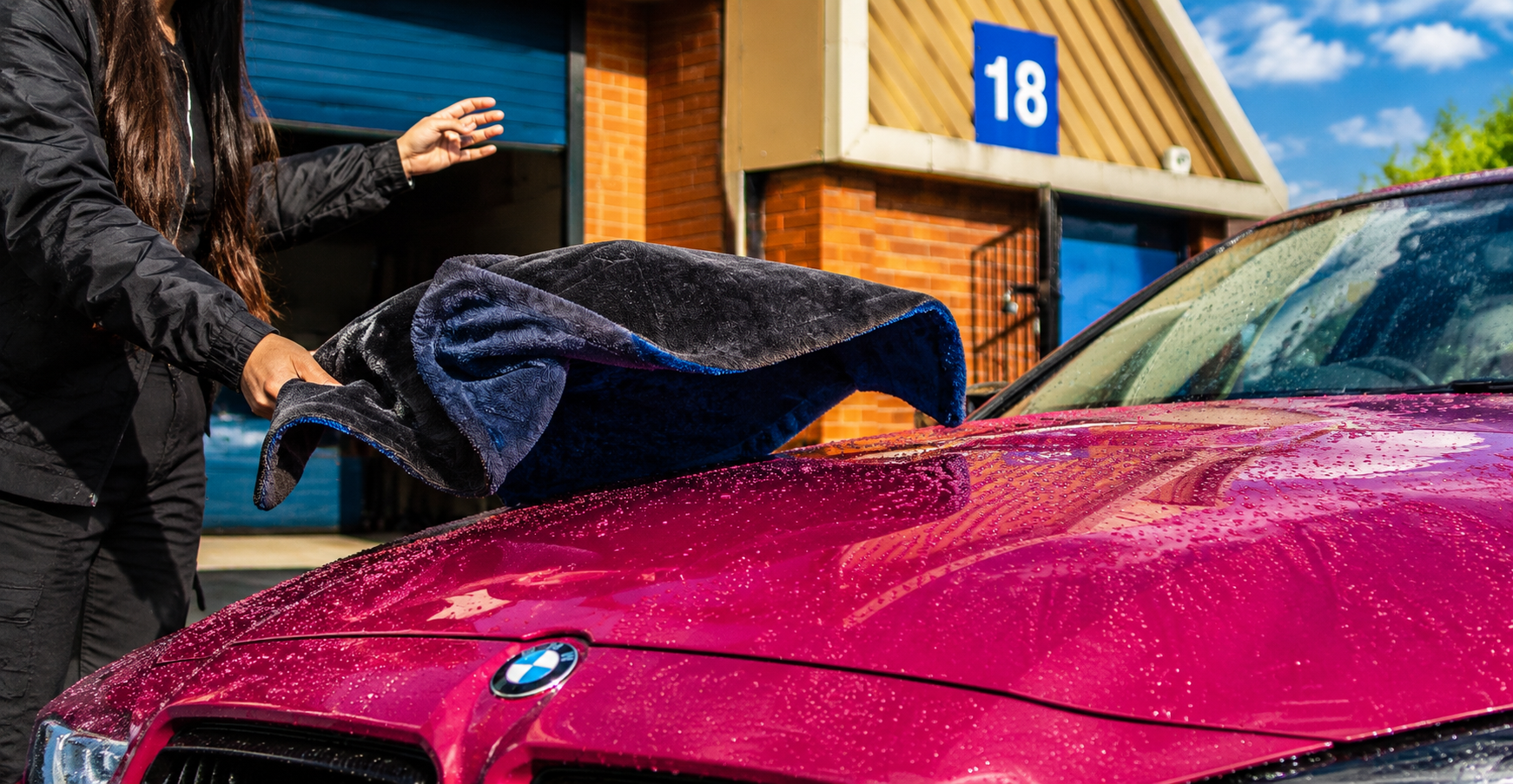
When people think about car cleaning products, they often focus on shampoos, snow foams, wheel cleaners, and paint protection. Yet one of the most important tools in any detailing kit is often overlooked: the humble microfibre towel.
In reality, your microfibre towels come into direct contact with almost every surface of your vehicle. Whether you're drying paintwork, buffing off wax, applying quick detailers, cleaning glass, or wiping interior trims, the quality of your towels can have a significant impact on the final result.
Using the wrong towel can introduce scratches, leave streaks, and reduce the effectiveness of your products. Choosing the right microfibre towel, on the other hand, can improve safety, efficiency, and overall finish quality.
Let's take a closer look at why microfibre towels are one of the most important investments you can make in your car care routine.
What Makes Microfibre Different?
Unlike traditional cloths, microfibre is made up of extremely fine synthetic fibres that are split during manufacturing. These microscopic fibres create a huge surface area capable of trapping dirt, dust, and moisture far more effectively than standard fabrics.
The structure of the fibres allows them to lift contamination away from surfaces rather than simply pushing it around. This makes them ideal for automotive detailing, where minimising contact and reducing friction is essential.
A quality microfibre towel can absorb several times its own weight in water while remaining soft enough to be used on delicate paintwork.
Why Cheap Towels Can Damage Paintwork
Not all microfibre towels are created equal.
Low-quality towels often contain shorter fibres, lower GSM ratings, and rougher edges. While they may appear similar at first glance, they can behave very differently when used on paintwork.
Cheaper towels are more likely to:
- Create fine scratches and swirl marks
- Leave lint behind
- Absorb less water
- Become rough after washing
- Wear out more quickly
Because paintwork is one of the most delicate surfaces on your vehicle, using premium microfibre towels is a simple way to reduce the risk of accidental damage.
The Importance of GSM Ratings
When shopping for microfibre towels, you'll often see the term GSM, which stands for grams per square metre.
Generally speaking, the higher the GSM, the thicker and plusher the towel will feel.
Lower GSM towels can be useful for certain tasks such as glass cleaning, while higher GSM towels are typically preferred for buffing, drying, and paintwork maintenance.
For example, the Signature Ultra Plush Microfibre Towel is designed with deep, soft fibres that make it ideal for buffing off waxes, quick detailers, and ceramic maintenance products without marring the surface.
Why Drying Towels Deserve Special Attention
One of the most important jobs a microfibre towel performs is drying.
Many swirl marks are introduced not during washing, but during the drying stage. This is because any remaining contamination can be dragged across the paint if the towel lacks sufficient softness or absorbency.
A dedicated drying towel is specifically designed to absorb large amounts of water while minimising friction.
The Carbon Collective Korean Ultra Plush Drying Towel is an excellent example. Its deep pile construction allows it to absorb significant amounts of water quickly, reducing the need for repeated passes across the paintwork.
This not only speeds up the drying process but also makes it considerably safer.
Different Towels for Different Jobs
One of the biggest mistakes enthusiasts make is using a single towel for every task.
Different areas of your vehicle require different types of microfibre.
For example:
- Drying towels for paintwork
- Plush towels for buffing waxes and detailers
- Glass cloths for windows and mirrors
- Interior towels for dashboards and trim
- Separate towels for wheels and dirty areas
By assigning towels to specific tasks, you reduce the risk of cross-contamination and extend the life of your detailing equipment.
Why Wheel Towels Should Never Touch Paintwork
Brake dust is one of the most abrasive contaminants found on any vehicle.
Even after washing, microscopic metallic particles can remain trapped within a towel's fibres.
If that same towel is later used on paintwork, those particles can create scratches and swirl marks.
This is why professional detailers always keep wheel towels completely separate from paintwork towels.
Colour coding your towels can make this process much easier and help prevent mistakes during maintenance washes.
Microfibre and Quick Detailers
Quick detailers have become increasingly popular for maintaining gloss between washes, but their effectiveness depends heavily on the towel being used.
Products such as Gyeon Q²M Quick Detailer work best when paired with a soft, high-quality microfibre towel capable of spreading the product evenly and safely.
A poor-quality towel can leave streaks, uneven coverage, or even introduce light marring during application.
Using the correct towel ensures you achieve the slick, glossy finish these products are designed to deliver.
Looking After Your Microfibres
Even the highest quality towel will eventually become ineffective if it's not cared for properly.
After use, towels should be washed separately from household laundry and stored in a clean environment.
Key maintenance tips include:
- Wash after every use
- Avoid fabric softeners
- Wash at low temperatures
- Store in sealed containers or drawers
- Replace heavily worn towels
Proper maintenance helps preserve softness and ensures your towels continue to perform at their best.
Can a Microfibre Towel Replace a Car Dryer?
While premium drying towels are highly effective, many enthusiasts are now turning to touchless drying systems.
The BigBoi range of car dryers uses filtered heated air to remove water from paintwork, grills, mirrors, badges, and wheel nuts without making physical contact.
This dramatically reduces the risk of towel-induced scratches while eliminating water trapped in hard-to-reach areas.
Many detailers now combine air drying with microfibre towels to achieve the safest possible finish.
The Long-Term Benefits of Quality Towels
Investing in premium microfibre towels often saves money in the long run.
Better towels reduce the risk of paint correction work, improve product performance, and last significantly longer when properly maintained.
They also make detailing more enjoyable. Better absorption, easier buffing, and streak-free results all contribute to a more satisfying experience every time you clean your vehicle.
While they may seem like a small part of the process, microfibre towels often have a bigger impact on results than many of the chemicals being used.
Final Thoughts
Microfibre towels are one of the most important tools in any detailing arsenal. From washing and drying to buffing and interior cleaning, they influence nearly every stage of the car care process.
Choosing high-quality towels, assigning them to specific tasks, and maintaining them properly can dramatically improve the safety and effectiveness of your detailing routine.
If you're serious about achieving professional-level results, investing in quality microfibre towels is one of the smartest upgrades you can make.
Explore the full range of microfibre towels and cloths available at My Car Cleaning and discover how the right towel can transform your detailing routine.