
Why Winter Washing Is a Different World
Winter washing isn’t just uncomfortable — it’s risky for your car. Freezing temperatures trap salt, moisture, and dirt against the paintwork, causing corrosion and dullness faster than any other season. But with the right approach, you can wash safely without fighting ice, streaks, and frozen doors.
Understanding the Main Winter Contaminants
Salt is the biggest threat. Not only does it cling aggressively, but mixed with slush and grit, it forms a corrosive paste that sits in wheel arches, sills, and lower panels. Traffic film also thickens in cold, wet air, making your car dirty again far faster than in summer.
The Winter Wash Process
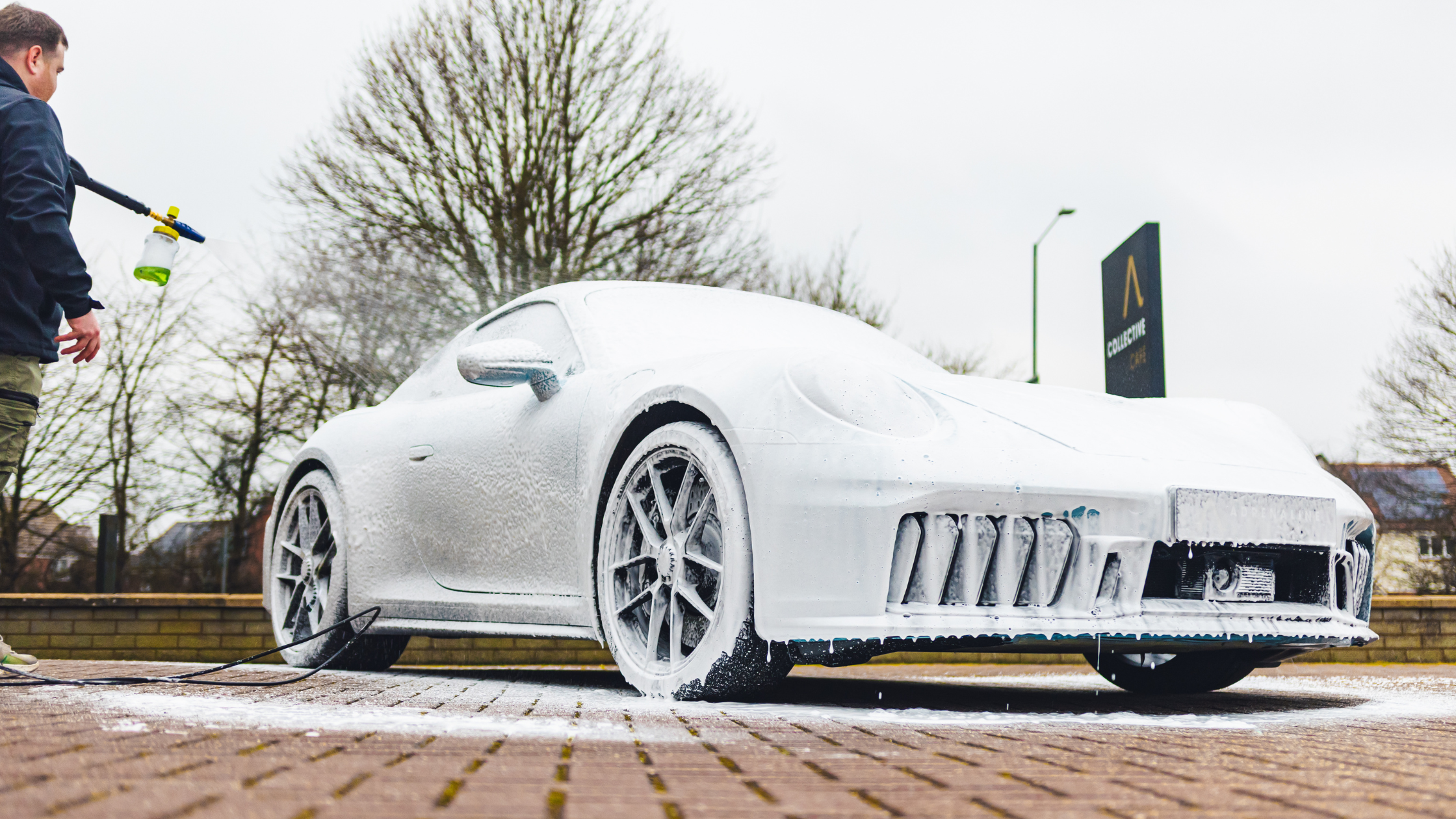
Start with a snow foam pre-wash to remove as much contamination as possible before touching the paint. A cold-weather friendly foam helps loosen packed grime without instantly freezing. Rinse thoroughly and work panel by panel with warm water in the buckets if needed.
Using a shampoo with high lubrication prevents micro-scratches when grit is unavoidable. Rinsing with warm water helps reduce freezing, and drying with a plush towel prevents trapped moisture from turning into ice spots.
Essential Last Step: Protection
Once clean, applying a spray sealant or ceramic topper provides a hydrophobic layer that keeps future dirt from sticking. Winter washing is about working smarter — not harder — and surface protection makes the biggest difference.